This page may contain affiliate links. If you click and purchase, we may earn a small commission at no extra cost to you. Read our full disclosure policy.
** Updated July 2, 2026 **
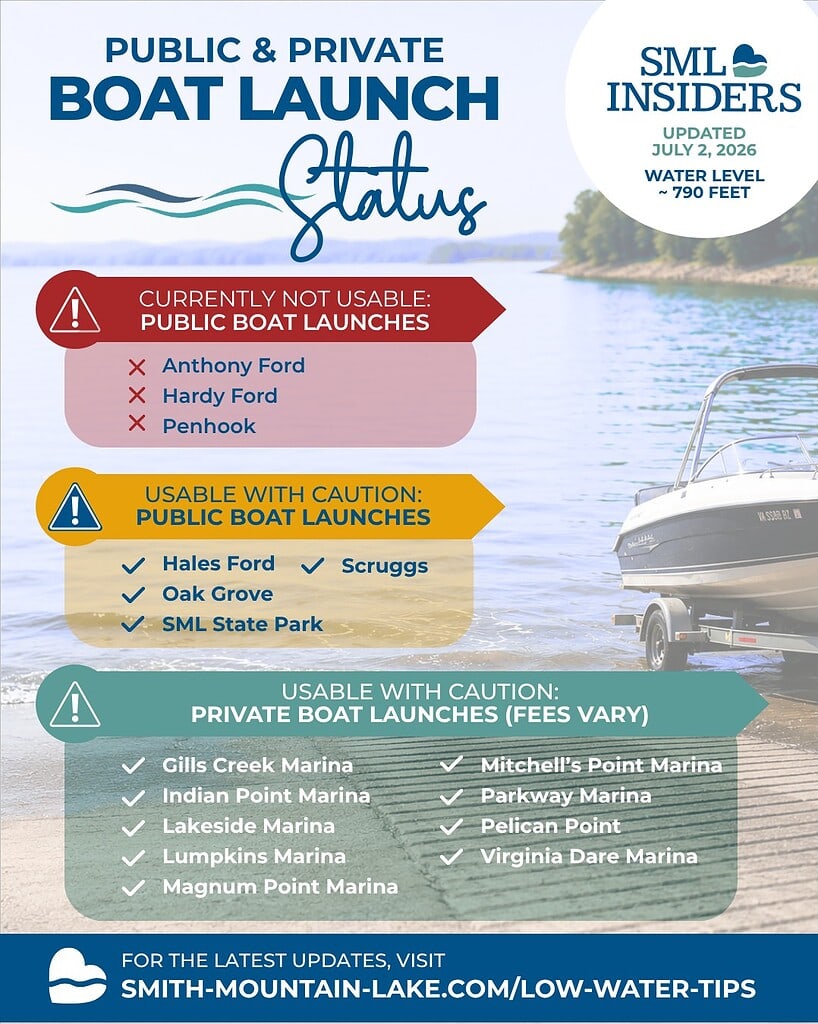
Note: Waterwheel Marina no longer offers boat launching access.

Insider Extra: Visit our SML Marina Guide for an interactive map of all marinas and public boat ramps at Smith Mountain Lake.
The Smith Mountain Lake Water Safety Council encourages boaters and swimmers to keep these reminders in mind, especially during the busy holiday weekend.
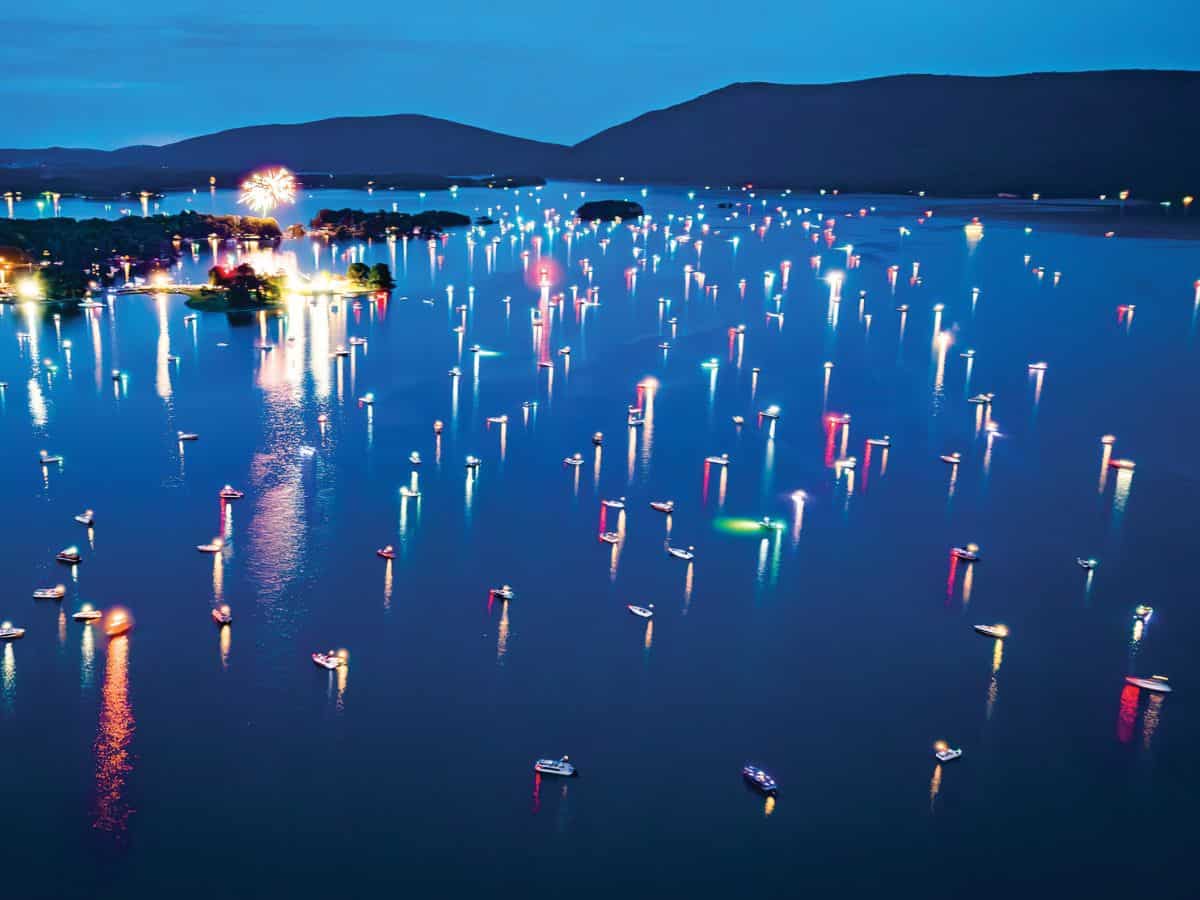
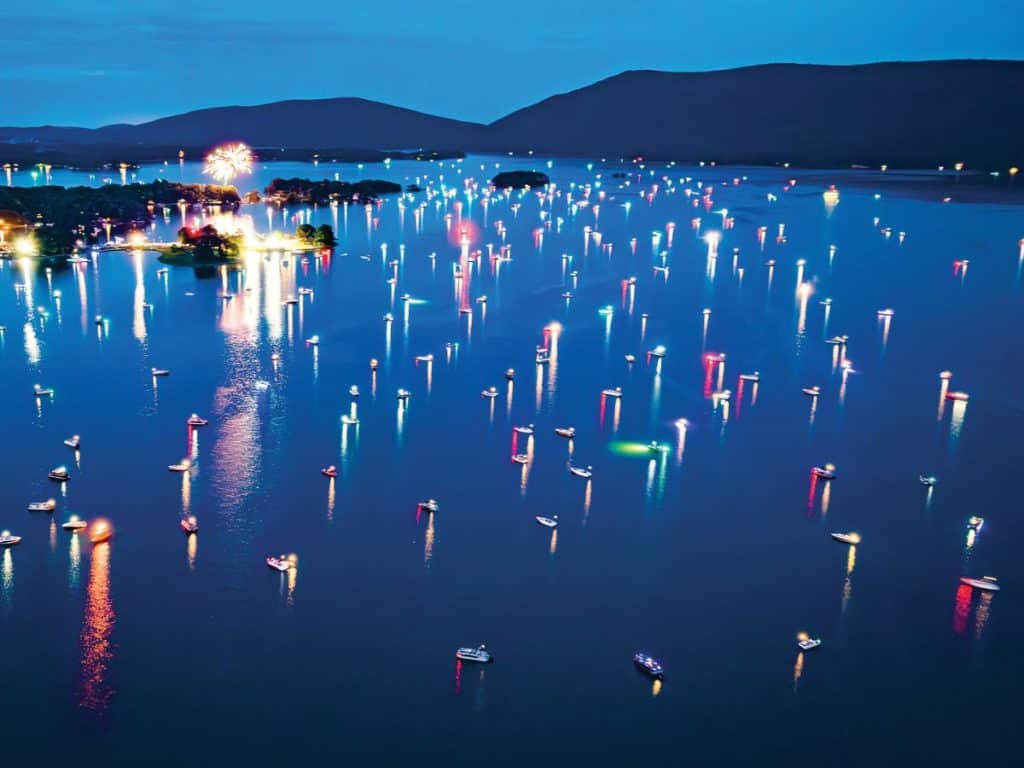
Over-water fireworks at Mitchell’s Point (July 2) and Parkway Marina (July 4) are No-Wake events. Get more details.
Due to low-water conditions, there will be fewer No-Wake Zone marker boats than usual. However, law enforcement will expect boaters to follow the established no-wake protocols when approaching and departing the primary viewing areas.
Temperatures will be high on the water. Bring plenty of sunscreen, iced beverages (non-alcoholic for skippers) and UV-resistant clothing or cover-ups.
This holiday weekend is “Operation Dry Water” across Virginia waterways. Law enforcement officers will be actively watching for operators impaired by alcohol or other substances.
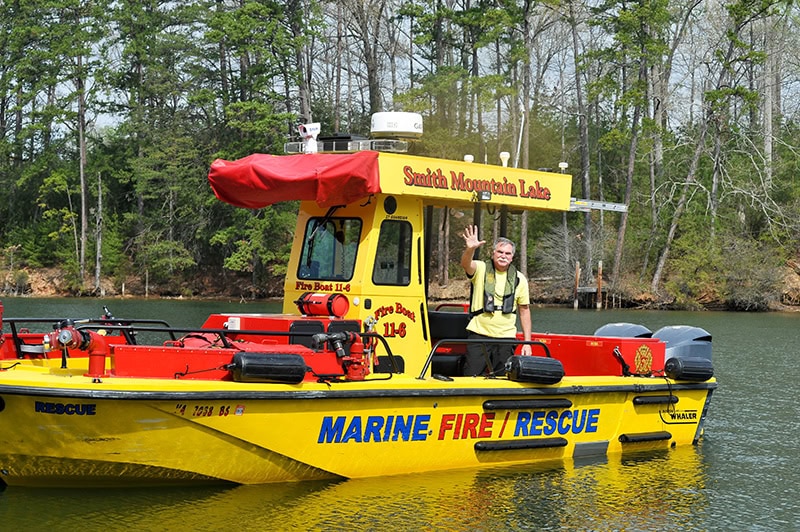
Virginia’s Move Over law applies on the water as well as on the road. Slow down and avoid creating a wake when passing law enforcement, emergency response or towing vessels, especially when they are actively assisting another boat.
Exercise extreme caution when climbing to or from floating docks. If you choose to use temporary ladders, secure them properly and have someone act as a spotter below. Be aware that sloped ramps at transient docks will be much steeper than usual because of low water. Offer assistance to anyone who may need it.
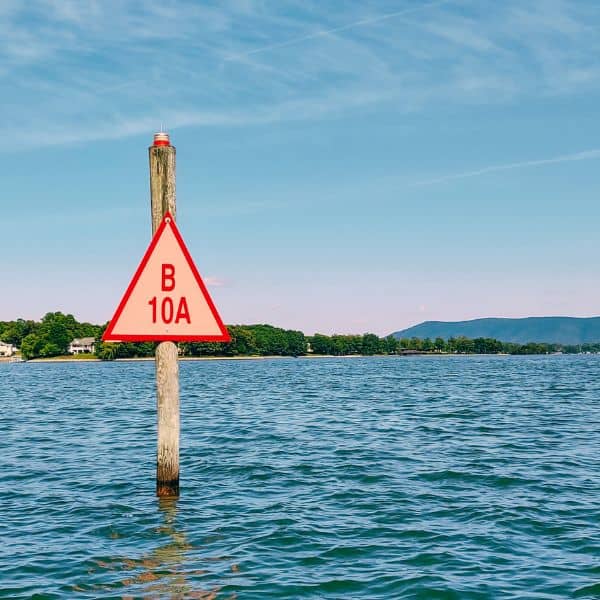
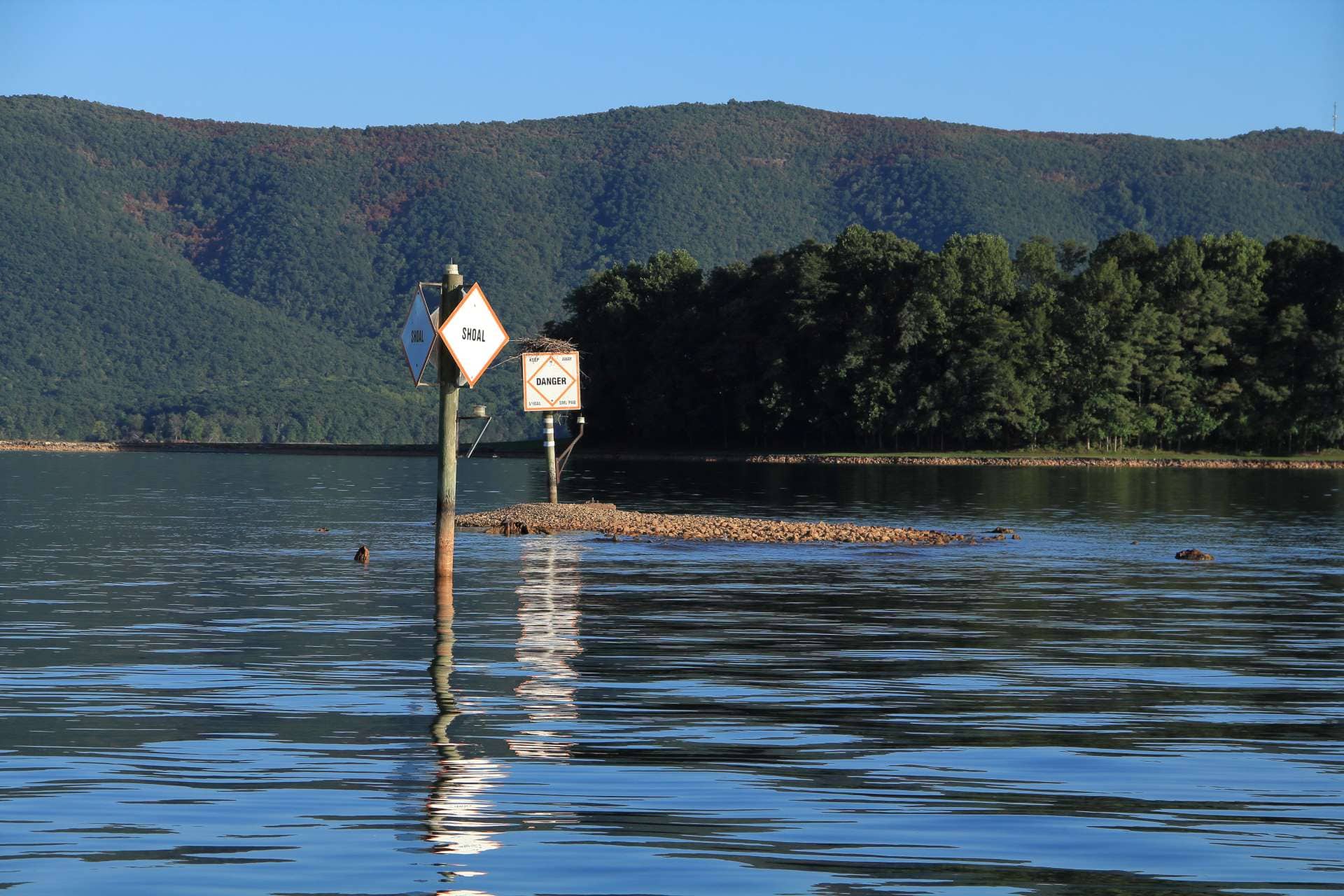
Because of low water, some hazard markers are no longer visible. One example is the large shoal between B8A and B10 near the “What About Bob?” house, where the normally protruding warning markers are now lying on the lake bottom and can be difficult to see, especially from a distance or in low light. Appalachian Power has placed a single red buoy in the area as a temporary shoal warning. Stay alert and give the area plenty of room.
Remind family and guests that areas where they’ve safely swum before may now be 5 feet or more shallower. Never dive from a floater or jump from a roof deck without first confirming the water is still deep enough.
A personal watercraft floating ramp should be placed in at least 4.5 feet of water to allow safe re-docking without the watercraft ingesting stones, sand or other bottom debris.
Under no circumstances should you add cable or chain to a boat lift while the vessel’s weight is still on it. The boat must be removed from the lift before any work is performed. Unless you’re an experienced do-it-yourselfer with the proper tools, hire a professional. Also, make sure your slip has enough water depth for the lift cradle to lower sufficiently.
Lift installers recommend never lowering your lift below the point where three winds of cable remain on the main winding pole. If your view is blocked by an automatic boat cover, you can safely check the cable by standing on a step ladder near the center piling of a finger pier while someone steadies the ladder. Always wear a life jacket, and never attempt this if the pier is too narrow for safe footing.
If you haven’t already, mark one of the lift’s forward centering poles with tape or a permanent marker to indicate the depth needed for your boat to float free. Keep in mind that if your boat barely clears the lift when launching, even a one-inch drop in water level could make it difficult to return to the slip.
Insider Extra: 16 Expert Tips for Boating at Night on Smith Mountain Lake
Use caution when launching and retrieving boats to avoid trailer wheels dropping off the end of concrete ramps. Recovering a trailer after the wheels slip off can be extremely difficult without capable assistance. Ramps that remain usable at the 790-foot level include Oak Grove, Scruggs and others (updated list pending).
Boat owners should also make sure lift cables are long enough to float a boat off its cradle — plus a bit extra in case water levels drop while you’re away.
Do not allow cables to fully unwind. Jason Turner of Turner’s Dock Building recommends leaving a minimum of three cable winds on the lift’s main drive pipe.
Slip owners using Touchless Boat Covers may need to carefully position a step ladder to monitor cable winds as boats are lowered. Chain extensions can be added to help boats reach the water if there is sufficient depth to prevent the cradle from bottoming out.
Turner added: “Take care not to create slack in cable winds by grounding the cradle on the lake bottom.”
Accessing floating docks also requires added caution. The top step to a floater may sit several feet below fixed dock level, turning the climb down — and back up again — into an acrobatic challenge that many people, particularly older adults, may find difficult.
Similar caution is warranted when navigating ramps from transient slips to fixed dock areas at lakefront restaurants. Slopes of 45 degrees or more may be encountered. Wear proper footwear instead of flip-flops or sandals, use handrails and offer assistance to passengers or crew members who may need help.

While underway, give channel and shoal markers extra leeway and stay farther from shore than normal, particularly along gently sloped shorelines. Exercise additional caution whenever visibility is reduced, including after dark or during fog.
If you inadvertently enter an area that appears shallow, idle back to deeper water with an outboard or stern drive trimmed up. Remember to trim back down before accelerating.
When water levels drop 3 feet or more below full pond, even personal watercraft should avoid the “shortcut” to Craddock Creek through the shoal markers between Beach and Middle islands.
The passage between Middle and Brides islands near R4 remains deep if you stay well clear of the shoals on your right near C1. If continuing along the main channel past R4, give C1 plenty of room as you turn into Craddock Creek.
Insider Extra: Keeping SML Safe: Guide to Water Safety Organizations
The Smith Mountain Lake Association (SMLA) and Water Safety Council offer several additional cautions during periods of low water:
Many shoals are now exposed. Boaters should remain within marked channels. Areas that are safely passable at or near full pond may now present serious grounding hazards. Tree roots and rocks normally hidden below the surface may lurk just inches underwater, posing risks to propellers, hulls and passengers alike. Wear life jackets.
Slow down and proceed cautiously when operating in coves or other potentially shallow areas.
Watch carefully for floating docks that may have broken free of their moorings, especially at night.
Read more low-water navigation tips from SMLA.
Report debris hazards to:
Dock owners are encouraged to inspect floating docks regularly to ensure they remain securely fastened. It is also recommended that waterproof contact information be placed somewhere visible to aid in returning float-away docks to their owners.
Take extra care when using launch ramps and when loading or unloading gear and passengers.
Finally, climbing from a fixed dock down to a floating dock becomes significantly more difficult when water levels are 3 feet or more below normal. Using a temporary ladder to access a floater can be risky.
Low water levels at Smith Mountain Lake are tied to an ongoing severe drought in southwest Virginia. Watch as AEP’s hydroelectric team breaks down what’s driving current conditions and how drought impacts lake operations.

STAFF WRITER
When he’s not writing about the Smith Mountain Lake, you might just find Jerry out wake surfing or just idling through its coves, practicing guitar or banjo on his deck at the Cottages of Contentment Island, playing steel drums or volunteering with LCM, Trinity Ecumenical Parish, Neighbors Helping Neighbors or the SML Charity Home Tour.